My Safe Florida Home Program Requirements: A Complete Homeowner Guide
Florida homeowners have access to one of the most valuable storm protection assistance programs in the country — and most people do not know they qualify. The My Safe Florida Home Program is a state-funded grant initiative that helps eligible Florida homeowners strengthen their homes against hurricanes by covering the cost of approved wind mitigation improvements.
The program provides matching grants of up to $10,000 to help pay for upgrades like impact windows, hurricane shutters, and roof improvements that make your home more resistant to storm damage. If you own a single-family home in Florida and have been putting off storm protection upgrades because of cost, this program may cover a significant portion of that investment. This guide walks you through every requirement, every step of the application process, and every strategy to maximize what you receive.
What Are the Requirements for the My Safe Florida Home Program?
Before applying, it is important to understand exactly what the My Safe Florida Home Program requires from eligible homeowners. Meeting these baseline requirements is the first step to accessing grant funds, and missing any one of them is the most common reason applications are delayed or denied.
To be eligible for the program, your property must be a site-built, single-family home that serves as your primary residence. The home must have been built before 2008, and its insured value must be $700,000 or less. The homeowner must currently carry a valid homeowner’s insurance policy on the property, and the home must have an existing wind mitigation inspection completed by a state-licensed inspector before a grant can be issued.
The grant itself operates on a dollar-for-dollar matching basis — meaning the state will match what you spend on approved improvements up to the program’s maximum. For most homeowners the maximum match is $10,000, though homes in low-to-moderate income categories may qualify for a higher grant amount with a reduced matching contribution. All improvements funded through the program must be installed by a licensed Florida contractor, and permits must be pulled and inspected through your local building department.
What Are the Requirements for the My Safe Florida Home Program?
Eligibility for the My Safe Florida Home Program is more accessible than many homeowners expect. The program is designed to reach a broad range of Florida homeowners, not just those in the highest-risk zones or the lowest income brackets. Here is who qualifies:
You must be the owner of a single-family, site-built home in Florida. The property must be your primary residence — investment properties, rental homes, condominiums, and manufactured or mobile homes do not qualify. Your home’s insured value must be at or below $700,000 as listed on your current homeowner’s insurance policy. The structure must have been built before 2008, which covers the vast majority of existing residential homes across Miami and South Florida.
Income-based priority is also a factor in how applications are processed and funded. Homeowners at or below 80 percent of the area median income (AMI) for their county may qualify for a grant that requires no dollar-for-dollar match — meaning the state covers the full cost of approved improvements up to the program maximum without requiring the homeowner to contribute matching funds. This makes the program especially powerful for lower-income homeowners who need storm protection most but have the least ability to self-fund improvements.
Homeowners who have previously received a grant through an earlier version of the My Safe Florida Home Program may still be eligible if they meet current requirements and have not received the maximum lifetime benefit. Always check the program’s current guidelines at the time of application, as funding availability and specific thresholds are updated each program cycle.
Ready to Upgrade Your Home?
How Do You Apply for the My Safe Florida Home Program Step by Step
Applying for the program is a structured process with specific steps that must be completed in order. Skipping or reversing any step is one of the most common reasons homeowners lose their place in line or become ineligible for reimbursement. Here is the correct sequence:
- Confirm eligibility — Verify that your home meets all baseline requirements: single-family primary residence, built before 2008, insured value at or below $700,000, and active homeowner’s insurance policy in place.
- Create an account and submit your application — Go to the official program portal at mysafefloridahome.com and complete your online application. You will need your property information, insurance policy details, and personal identification.
- Schedule your free wind mitigation inspection — Once your application is accepted, the program will assign a state-approved inspector to conduct a free wind mitigation inspection of your home. Do not hire your own inspector at this stage — the inspection must be coordinated through the program.
- Receive your inspection report and grant award letter — After the inspection, you will receive a wind mitigation report identifying your home’s vulnerabilities and a grant award letter specifying how much funding you are eligible to receive.
- Hire a licensed Florida contractor — Select a licensed, insured contractor to complete the approved improvements. All work must be performed by a licensed contractor — unlicensed work does not qualify for reimbursement under any circumstances.
- Complete improvements and pass inspection — Your contractor pulls the required permits, completes the approved work, and passes the final building inspection. All permit documentation must be preserved for your reimbursement application.
- Submit your reimbursement request — Upload your contractor invoices, proof of payment, permit documentation, and final inspection records through the program portal to receive your matching grant reimbursement.
The My Safe Florida Home Program processes reimbursements after work is completed and documented — meaning you pay your licensed contractor first and the state reimburses your matching contribution. Plan your project financing accordingly and confirm the full documentation checklist with your contractor before work begins.
Do You Need a Wind Mitigation Inspection to Qualify?
Yes — a wind mitigation inspection is not optional. It is a mandatory requirement of the program and the document that determines both your eligibility and the specific improvements your grant will cover. Without a completed wind mitigation inspection, your application cannot move forward and no grant funds can be issued.
The wind mitigation inspection evaluates your home’s existing storm resistance features across several categories: roof covering, roof deck attachment, roof-to-wall connection, roof shape, opening protection (windows, doors, and skylights), and secondary water resistance. Each category is rated based on current construction and the inspector assigns a score that reflects how well your home is likely to perform in a major wind event.
The good news is that the My Safe Florida Home Program provides this inspection at no cost to eligible applicants. You do not pay for the inspection out of pocket — it is funded by the program as part of the application process. The inspection must be completed by a state-approved inspector assigned through the program portal, not by a private inspector you hire independently. The results of this inspection become the basis for your grant award letter and determine exactly which improvements are prioritized for funding.
What Home Improvements Are Covered Under the Program?
The program funds a specific list of wind mitigation improvements that have been proven to reduce storm damage in Florida homes. Understanding exactly what is covered helps you plan your project and maximize the value of your grant award. Here are the approved improvement categories:
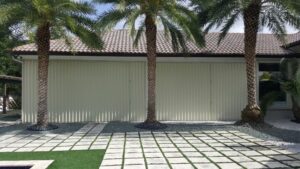
- Opening protection — Hurricane shutters, accordion shutters, roll-down shutters, storm panels, and impact-resistant windows and doors. This is the most commonly funded improvement category and the one where most Miami homeowners see the greatest benefit
- Roof covering — Replacement of existing roof covering with a wind-rated roofing system that meets Florida Building Code requirements for your wind zone
- Roof deck attachment — Reinforcement of the connection between your roof sheathing and the roof structure using ring-shank nails or other approved fasteners to prevent roof deck loss during a storm
- Roof-to-wall connections — Installation of hurricane straps or clips that strengthen the connection between your roof structure and your home’s walls — one of the most critical factors in preventing roof loss during a hurricane
- Secondary water resistance — Application of a sealed underlayment system beneath your roof covering to prevent water intrusion if the primary roof covering is damaged during a storm
Of these categories, opening protection — specifically impact windows, impact doors, and hurricane shutters — is typically the most accessible and most impactful improvement for Miami homeowners. It directly reduces the risk of catastrophic pressure failure during a storm and delivers the highest wind mitigation score improvement per dollar invested.
Start Your My Safe Florida Home Application Today
Why Do Some My Safe Florida Home Program Applications Get Denied?
Understanding why applications are denied is just as important as knowing how to apply. The My Safe Florida Home Program has specific documentation and eligibility requirements, and applications that are incomplete, inconsistent, or submitted out of sequence are routinely delayed or denied. Here are the most common reasons:
The property does not meet eligibility requirements — either it is not a primary residence, was built in 2008 or later, exceeds the $700,000 insured value threshold, or is a property type that does not qualify such as a condo or manufactured home. Missing or expired documentation is another frequent issue — an insurance policy that has lapsed, a wind mitigation inspection that was conducted outside the program’s approved process, or contractor documentation that does not include the required license numbers and permit records.
Using an unlicensed contractor is one of the most serious and unrecoverable denial reasons. If improvements are completed by a contractor who is not licensed under Florida law, the work does not qualify for reimbursement under any circumstances — and there is no appeal process for this specific issue. Always verify your contractor’s license at myfloridalicense.com before signing any contract.
Applying for improvements that were already completed before the grant award letter was issued is also a disqualifying error. The program requires that all funded improvements be completed after the grant award date. Work completed before your award letter is issued — even if it would otherwise qualify — cannot be reimbursed.
How Can You Maximize Your My Safe Florida Home Grant Benefits?
Getting the most out of the My Safe Florida Home Program requires strategic planning before, during, and after your application. Here is how to maximize your grant and stretch every dollar:
Start with the improvements that deliver the highest wind mitigation score improvement per dollar invested. In most Miami homes, opening protection — impact windows, impact doors, and hurricane shutters — delivers the strongest score improvement and the most direct reduction in storm risk. Prioritizing these improvements also tends to produce the largest insurance premium discounts, which compounds the financial benefit well beyond the grant itself.
Work with a licensed contractor who has direct experience with program documentation requirements before you sign any contract. A contractor who understands what the program requires in terms of permits, inspection records, and invoicing formats will save you significant time and reduce the risk of documentation errors that delay or reduce your reimbursement.
Submit your reimbursement application with complete documentation the first time. Incomplete submissions are a leading cause of delayed reimbursements. Confirm the full checklist with your contractor — contractor license number, permit copies, final inspection sign-off, itemized invoices, and proof of payment — before uploading anything to the portal.
Finally, use your completed wind mitigation inspection report to apply for insurance discounts immediately, regardless of whether your grant has been reimbursed yet. The inspection report is yours to use independently of the program, and submitting it to your insurance carrier can generate premium savings that begin at your next renewal — often within weeks of your inspection.
How much money can I get from the My Safe Florida Home Program?
Eligible homeowners can receive a matching grant of up to $10,000. Lower-income homeowners at or below 80 percent of the area median income may qualify for a grant with no matching requirement, meaning the state covers the full approved amount without requiring dollar-for-dollar contribution from the homeowner.
Can I use the My Safe Florida Home Program for impact windows?
Yes. Impact-resistant windows and doors are one of the approved improvement categories under the opening protection section of the program. This is one of the most commonly funded improvements for Miami homeowners and one of the highest-value upgrades in terms of wind mitigation score improvement and insurance discount potential.
How long does the My Safe Florida Home Program application take?
Timelines vary based on application volume and funding availability. From initial application to receiving your grant award letter, the process typically takes several weeks to a few months. Once your award letter is issued, your contractor can begin work and the reimbursement process begins after documented completion.
Does the My Safe Florida Home Program cover roof replacement?
Yes, but only specific wind-rated roof covering systems that meet Florida Building Code requirements for your wind zone qualify. Not every roofing product is eligible — your contractor must confirm that the proposed roof covering meets program specifications before work begins.
Can a landlord apply for the My Safe Florida Home Program?
No. The program is limited to owner-occupied primary residences. Investment properties, rental homes, and vacation homes do not qualify regardless of the owner’s income level or the property’s location.
What happens if my application is denied?
If your application is denied, you will receive a denial notice that specifies the reason. Many denials are correctable — missing documentation, an expired insurance policy, or an eligibility issue that can be resolved before reapplying. Contact the program directly or consult with your licensed contractor to identify and address the specific denial reason before submitting a new application.
Ready to Apply? Let NFC Aluminum Handle Your Program-Qualifying Improvements in Miami
The My Safe Florida Home Program is one of the most valuable resources available to Florida homeowners — but only if your improvements are completed by a licensed contractor with the documentation to back it up. NFC Aluminum is a Florida Certified General Contractor (License #CGC 1539835) with over 25 years of experience installing impact windows, hurricane shutters, and storm protection systems throughout Miami and South Florida. We handle every permit, every inspection, and every piece of documentation your reimbursement requires — so you get the full value of your grant without the paperwork stress. Contact us today.
Serving Miami, Miami Beach, Coral Gables, Doral, Hialeah, and all of Miami-Dade County. Florida Certified General Contractor.