Screen Enclosures and Pool Cages in Miami, FL
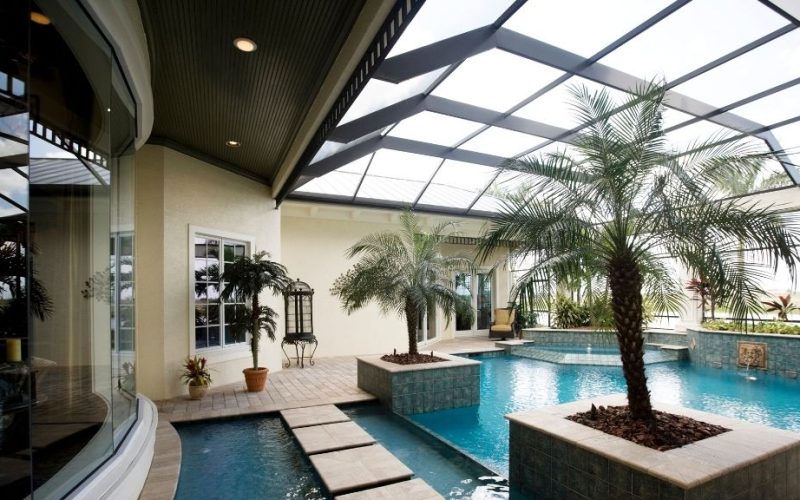
Screen Enclosures and Pool Cages from NFC Aluminum
Living in Miami means enjoying one of the most enviable outdoor lifestyles in the country — but it also means contending with relentless mosquitoes, afternoon downpours, intense UV radiation, and a hurricane season that runs half the year. For Miami homeowners with a pool, an uncovered backyard can feel like a daily battle against nature. That’s exactly why pool screen enclosures have become one of the most sought-after home improvements across South Florida.
In this guide, we cover everything you need to know about pool screen enclosures in Miami, FL — from why they’re essential to how they’re built, how long they last, and what they’re worth. Whether you’re installing a new pool cage or replacing an aging enclosure after storm damage, this article will help you make the right decision for your home and your budget.
NFC Aluminum (CGC #1539835) is a Florida-certified general contractor with over 25 years of experience in pool cage installation and screen enclosures across Miami, Miami-Dade County, and the broader South Florida area. Here’s what every Miami homeowner should know before investing in a screened pool enclosure.
Why Screen Enclosures Are Essential for Miami Pools
Miami sits in a subtropical climate zone where mosquitoes, no-see-ums, and other biting insects are not a seasonal problem — they’re a year-round reality. An open pool in South Florida is an open invitation for insects, and no amount of citronella torches or bug spray fully solves the problem. Pool screen enclosures in Miami, FL are specifically designed to address this — creating a physical barrier that eliminates insect intrusion entirely, allowing your family to enjoy the pool at any hour without repellent.
Beyond insects, Miami’s UV index consistently ranks among the highest in the continental United States. Prolonged exposure to unfiltered South Florida sun during a morning swim is a genuine health concern for frequent swimmers — particularly children. Screen mesh filters a meaningful portion of UV radiation, reducing exposure without blocking light or airflow.
Then there’s debris. Surrounding palm trees, tropical vegetation, and Miami’s frequent afternoon thunderstorms constantly foul uncovered pools with leaves, seed pods, dirt, and organic matter. Each debris load drives up chemical usage, strains the filter system, and adds time to your weekly pool maintenance routine. A screened pool enclosure eliminates the vast majority of this debris, reducing maintenance costs significantly and extending the life of pool equipment. For Miami homeowners who use their pools 12 months a year, an enclosure pays for itself in saved maintenance alone.
Start Your Project Today
How Pool Cages Protect Your Miami Home from the Elements
A pool cage does far more than keep bugs out. In Miami’s demanding climate, a well-built pool cage acts as a structural buffer between your outdoor living space and everything South Florida’s weather can throw at it — from daily afternoon thunderstorms and tropical depressions to the sustained winds of a major hurricane.
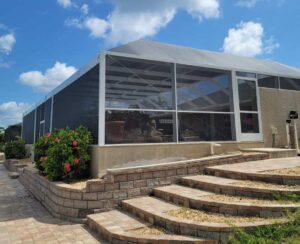
The aluminum framing used in quality pool cages is engineered to withstand high wind loads while the screen panels allow airflow to pass through, reducing structural pressure on the frame during storm events. This combination of strength and permeability is what makes aluminum-framed screen enclosures particularly well-suited to Florida’s coastal environment. Unlike rigid solid structures, they flex and breathe rather than catch wind like a sail.
Inside the cage footprint, your pool deck, outdoor furniture, grill, and pool equipment are shielded from wind-borne debris during tropical storms and hurricanes. Flying branches, loose gravel, and airborne objects that would damage an uncovered pool deck are stopped at the screen perimeter. Pool surfaces themselves are protected from staining and impact damage. At NFC Aluminum, every pool cage installation uses commercial-grade aluminum framing and screen mesh rated for Florida’s coastal salt-air environment — materials that are built to last through South Florida’s harshest conditions.
What Materials Make the Best Pool Cages for Miami Weather?
Miami’s environment is one of the most demanding in the country for building materials. Salt air from the coast, extreme UV radiation, year-round humidity, and hurricane-season wind loads combine to accelerate corrosion, degrade screen mesh, and stress structural fasteners faster than virtually any other climate in the U.S. Choosing the right materials for your pool cage isn’t just a quality question — it’s the difference between an enclosure that lasts 20 years and one that fails in five.
The key material choices and what each brings to a Miami pool cage:
- 6000-Series Aluminum Framing — the gold standard for Miami pool cages. Corrosion-resistant, lightweight, and rated for high wind loads without warping or rusting. Avoid lower-grade aluminum, especially in oceanfront or bay-front properties where salt exposure is extreme.
- 18×14 Fiberglass Screen Mesh — the most common screen specification for Florida pools. Blocks insects and fine debris while allowing maximum airflow and visibility. Cost-effective and easy to replace when UV degradation occurs.
- 20×20 ‘No-See-Um’ Screen Mesh — a finer weave essential for properties near water, wooded areas, or communities with persistent tiny insect problems. Slightly reduces airflow but dramatically improves pest exclusion.
- Super Screen / BetterVue Mesh — premium screen options offering improved outward visibility, greater UV filtration, and a cleaner aesthetic. Ideal for homeowners prioritizing sightlines and curb appeal alongside function.
- Stainless Steel Hardware & Fasteners — non-negotiable in coastal Miami environments. Standard steel hardware corrodes within months in salt air; stainless hardware adds meaningful upfront cost that pays back in longevity and structural integrity.
NFC Aluminum sources commercial-grade materials for every pool cage installation and guides each client through the right material specification for their property, location, and budget. There is no one-size-fits-all answer in Miami — the right spec depends on how close you are to the water, what insects pressure your neighborhood most, and how long you plan to stay in the home.
Ready To Upgrade Your Miami Home?
Are Pool Cages Worth the Investment for Miami Homeowners?
It’s a fair question. Pool screen enclosures in Miami, FL represent a meaningful upfront investment — typically ranging from several thousand to tens of thousands of dollars depending on pool size, enclosure height, and material specification. But for most Miami homeowners, the financial math works strongly in favor of installing one.
Start with maintenance savings. Miami homeowners with screened pool enclosures consistently report reduced spending on pool chemicals, filter maintenance, and pool service visits. Fewer leaves and less debris mean less organic matter decomposing in your water, which means fewer algae treatments, lower chlorine demand, and a cleaner pool between service visits. Over five to ten years, these savings can meaningfully offset the installation cost.
Finally, factor in property value. As covered in the section below, a well-maintained pool cage is a marketable feature in Miami’s real estate market. Buyers shopping in neighborhoods across Miami-Dade actively seek homes with enclosed pools — and they price accordingly. For additional details on storm protection investments that increase home value, see our hurricane shutters in Miami guide.
How Long Do Pool Cages Last in Miami's Tropical Climate?
A properly installed, commercial-grade aluminum pool cage in Miami should last 15 to 20 years or more — provided it’s built with the right materials and receives basic annual maintenance. That said, Miami’s environment is harder on pool enclosures than most of the country, and there are specific failure points every homeowner should understand.
Screen mesh is typically the first component to show wear. UV radiation in South Florida accelerates fiberglass screen degradation, and most standard mesh will need to be replaced every 7 to 10 years under normal conditions. This is a routine maintenance item — not a structural concern. Individual panels can be re-screened as they fail rather than waiting for a complete replacement, which keeps costs manageable over the enclosure’s lifespan.
After a major storm or hurricane, a structural inspection by a licensed contractor is essential before re-screening. Frame stress fractures, bent members, and compromised anchor points are not always visible to the untrained eye but can compromise the enclosure’s ability to perform in the next storm. NFC Aluminum provides both full pool cage re-screening and complete structural replacement services throughout Miami-Dade. Contact us for a post-storm assessment.
Why Screened Pool Enclosures Are Perfect for Miami Hurricanes
One of the most common questions Miami homeowners ask before investing in a pool cage is whether it will survive a hurricane. It’s a legitimate concern — and the honest answer is that a quality aluminum pool enclosure is actually engineered with Florida’s hurricane season in mind.
The key design principle is intentional venting. Screen panels are designed to release under extreme wind pressure rather than hold it — this is not a flaw, it’s the engineering intent. By allowing wind to pass through and, if necessary, allowing screens to tear under Category 4 or 5 conditions, the system protects the aluminum frame itself from catastrophic structural failure. The frame is the expensive and difficult-to-replace component; screens are relatively fast and affordable to restore after a storm.
Here is how to prepare your pool enclosure before, during, and after a hurricane:
- Before a storm: remove or secure all loose items inside the cage — furniture, toys, planters, and accessories become projectiles under hurricane winds. Do not attempt to cover or seal the screen panels; venting is intentional and critical.
- During a storm: the aluminum frame is designed to flex and survive through most storm categories. Screen panels may tear or detach — this is expected behavior and protects the structural frame from wind load buildup.
- After a storm: inspect the frame carefully for bent members, stress fractures, or anchor damage before scheduling re-screening. Contact a licensed contractor for a structural assessment if the storm was severe or if any frame deformation is visible.
- Re-screening timeline: most storm-damaged screen panels can be replaced within days of a hurricane passing, depending on contractor availability and material supply. NFC Aluminum prioritizes post-storm re-screening for existing clients.
- Insurance documentation: photograph all storm damage to your pool enclosure before any cleanup or temporary repairs. Most Florida homeowners policies cover screen enclosure storm damage — thorough documentation supports a faster and more complete claim.
NFC Aluminum offers rapid post-hurricane re-screening and structural repair services throughout Miami-Dade. For broader storm preparedness guidance, visit FEMA’s Hurricane Preparedness Resources.
How much does a pool screen enclosure cost in Miami, FL?
Pool cage costs in Miami typically range from $6,000 to $25,000+ depending on pool size, enclosure height, and material specification. Oceanfront or larger properties with premium screen mesh and stainless hardware will sit at the higher end. NFC Aluminum provides free, detailed written estimates with no obligation. |
Do I need a permit for a pool cage in Miami-Dade?
Yes. Pool cage installations in Miami-Dade County require a building permit. The permit process involves structural drawings, product approvals, and a final inspection. NFC Aluminum manages the entire permitting process on your behalf — you don’t need to navigate county offices. |
How long does pool cage installation take?
Most residential pool cage installations are completed in 2 to 5 days once permits are approved. Permitting timelines with Miami-Dade Building Department vary but are typically 2 to 6 weeks. NFC Aluminum will provide a full project timeline during the estimate process. |
Can I add a screen enclosure to an existing pool in Miami?
Absolutely. The majority of our pool cage installations are retrofits on existing pools. As long as the pool deck has adequate footprint for anchor points and the structure complies with current Florida Building Code requirements, an enclosure can be added to virtually any existing pool. |
What is the difference between a pool cage and a screen enclosure?
In Florida, the terms are often used interchangeably. Technically, a ‘pool cage’ refers specifically to the aluminum-framed structure enclosing a pool area, while ‘screen enclosure’ is a broader term that can include lanais, patios, and other outdoor spaces enclosed with screen panels. |
How do I maintain my pool screen enclosure in Florida?
Annual power washing of frame and screen panels, seasonal inspection and lubrication of door hardware, prompt replacement of torn individual screen panels, and a structural inspection after any major storm. Consistent minor maintenance prevents expensive repairs and extends enclosure life significantly. |
Can pool enclosures withstand Category 4 hurricanes?
Quality aluminum pool cages are engineered to withstand high wind loads per Florida Building Code. Screen panels may tear under extreme conditions — this is intentional venting that protects the frame. The aluminum structure itself is built to survive Category 4 and in many cases Category 5 conditions. |
Do pool screen enclosures reduce mosquitoes in Miami?
Yes — significantly. A properly installed screen enclosure with 18×14 or finer mesh effectively eliminates mosquito intrusion within the enclosed area. For properties near standing water or heavy vegetation, 20×20 no-see-um mesh provides even more complete insect exclusion. |
Get in Touch With the Local Experts
Latest Post